Why Personalization Matters
Individual skin biology makes a one-size-fits-all approach ineffective. Personalization minimizes risks and maximizes results by matching treatments to a patient’s unique characteristics.
Fitzpatrick Skin Typing
The Fitzpatrick scale classifies skin from Type I (very fair) to Type VI (very dark) based on melanin content and sun sensitivity. This classification is critical because melanin absorbs light energy. Using an inappropriate laser or peel on darker skin can cause burns or hyperpigmentation. For instance, Nd:YAG lasers are preferred for Fitzpatrick IV–VI skin, while radiofrequency remains safe across all types.
Individual Collagen Dynamics
Non-surgical treatments rely on stimulating each patient’s own collagen. This natural process varies significantly based on genetics, age, and hormonal status. Microneedling or radiofrequency can be adjusted in depth and energy to account for a patient’s unique collagen production rate, ensuring effective yet safe remodeling of the skin.
Holistic Wellness
True rejuvenation extends beyond the skin. At BeYounger Clinic, treatments are integrated with hormone optimization, lifestyle guidance, and stress management. A balanced diet, hydration, and quality sleep support collagen synthesis and prolong results, creating a sustainable foundation for youthful skin. This holistic framework ensures that treatments align with overall vitality.
| Factor | Consideration | Effect on Treatment |
|---|---|---|
| Skin Type (Fitzpatrick) | Melanin content | Laser/peel selection; safety |
| Collagen Dynamics | Production rate & quality | Energy depth & intensity |
| Holistic Health | Hormones, nutrition, stress | Results longevity & skin repair |
Assessing Skin Type and Setting Goals
What are the best tailored non-surgical therapies for individual skin types?
The best therapies start with an accurate assessment. The Fitzpatrick skin type scale is a primary tool, classifying skin from Type I (very fair, always burns) to Type VI (very dark, never burns). This scale guides treatment selection because energy-based and chemical procedures interact differently with melanin.
For example, darker skin (Types IV-VI) is at higher risk for hyperpigmentation from traditional lasers. Safer, effective options for these types include Nd:YAG lasers, RF microneedling, and superficial chemical peels. Fairer skin (Types I-II) allows for more flexibility, including medium-depth peels and certain ablative lasers.
Skin analysis tools
Advanced tools provide objective data beyond visual inspection. A Visia Complexion Analysis captures multi-spectral images to measure wrinkles, spots, pores, texture, and UV damage. This allows your practitioner to create a precise treatment plan and monitor progress over time.
Patient history
A comprehensive review of your medical history, lifestyle (sun exposure, diet, stress), and prior cosmetic procedures is essential. This ensures selected therapies are safe and effective for your unique biology and goals.
At BeYounger Clinic, this detailed assessment phase is the foundation for a truly personalized, medically supervised treatment plan. Based on your specific skin type, a custom protocol using modalities like Ultherapy, RF microneedling, or injectables is developed to safely achieve your aesthetic goals.
| Skin Type (Fitzpatrick) | Safe Treatment Options | Procedures to Approach with Caution |
|---|---|---|
| I-II (Fair) | Laser resurfacing, medium-depth peels, IPL | Strong chemical peels (higher risk of scarring) |
| III-IV (Medium to Olive) | RF microneedling, Nd:YAG lasers, superficial peels | Ablative CO2 lasers, deep TCA peels |
| V-VI (Dark) | Microneedling, RF skin tightening, gentle peels | Broadband light (IPL), deep chemical peels |
Microneedling and RF Microneedling: Collagen Boosters
Understanding the Mechanism of Micro‑injury
Microneedling, also termed collagen induction therapy, uses fine, sterile needles to create controlled micro‑injuries in the skin. This process activates the body's natural healing response, stimulating the production of collagen and elastin. Radiofrequency (RF) microneedling combines these micro‑injuries with targeted radiofrequency energy, heating deeper dermal layers to further enhance collagen remodeling and skin tightening. Both techniques are effective for improving fine lines, acne scars, enlarged pores, and overall skin texture.
Safety Across All Fitzpatrick Types
A significant advantage of both microneedling and RF microneedling is their safety profile for all skin tones. Because the energy bypasses the melanin-containing outer skin layer, there is a very low risk of hyperpigmentation or burns, unlike some laser therapies. This makes them a versatile option for patients with Fitzpatrick skin types IV through VI. At BeYounger Clinic, procedures are carefully adjusted for needle depth and energy levels based on your unique skin characteristics.
Recovery Timeline and Session Schedule
After a session, patients typically experience mild redness and swelling, similar to a sunburn, which usually subsides within a few days. Most individuals can return to normal activities the same day. Noticeable improvements in skin texture and firmness generally become apparent after 3-4 sessions, with optimal collagen-building results developing over several months. A typical treatment plan involves a series of 2-6 sessions spaced 4-6 weeks apart, with results lasting up to one year with proper skincare and maintenance. For optimal outcomes and a personalized schedule, consulting with a qualified provider is essential.
|||
What is the most effective non-surgical face treatment?
There is no single "most effective" non-surgical face treatment. The best option depends entirely on your specific concerns, skin type, and desired outcome. For tightening and lifting, Ultherapy (ultrasound) and radiofrequency microneedling are excellent choices for many patients. To restore lost volume and contour, dermal fillers or thread lifts may be more appropriate. At BeYounger Clinic, our physician-led approach combines advanced technologies like HIFEM, laser resurfacing, and plasma pen therapy for comprehensive facial rejuvenation, often incorporating hormone optimization to support skin health from within. A thorough consultation is essential to determine the ideal combination for achieving safe, natural, and youthful results.
Ultherapy and Ultrasound Tightening
Focused Ultrasound Mechanism
Ultherapy, the most recognized brand of ultrasound skin tightening, uses focused ultrasound energy to heat skin at specific depths—up to 5 millimeters. This heat targets foundational layers like the SMAS, the same layer tightened in a surgical facelift. The process stimulates new collagen production, gradually improving skin firmness and lifting the brow, chin, neck, and chest. Treatments take 30 to 90 minutes with no downtime, and results become noticeable in 2 to 3 months, lasting up to a year with good skincare.
Efficacy for Face and Abdomen
Non‑surgical skin tightening is effective for mild to moderate skin laxity on both the face and stomach. On the face, Ultherapy and radiofrequency (RF) therapies improve firmness and provide a subtle lift. For the abdomen, RF or ultrasound treatments can help tighten loose skin, often after weight loss or pregnancy. Results are gradual, appearing over several months, and typically require 2 to 6 sessions. Full effects develop over 2 to 6 months and can last up to one to two years with maintenance sessions.
Age‑Related Considerations
While younger patients often see faster results due to higher baseline collagen, older patients can still achieve noticeable lifting as new collagen forms over months. Ultherapy is not recommended for those with advanced skin sagging, which may require surgery. Ideal candidates have mild to moderate laxity and are in good health. A consultation helps determine if the treatment is appropriate based on skin quality and specific needs.
Chemical Peels and Laser Resurfacing: Tailoring Depth
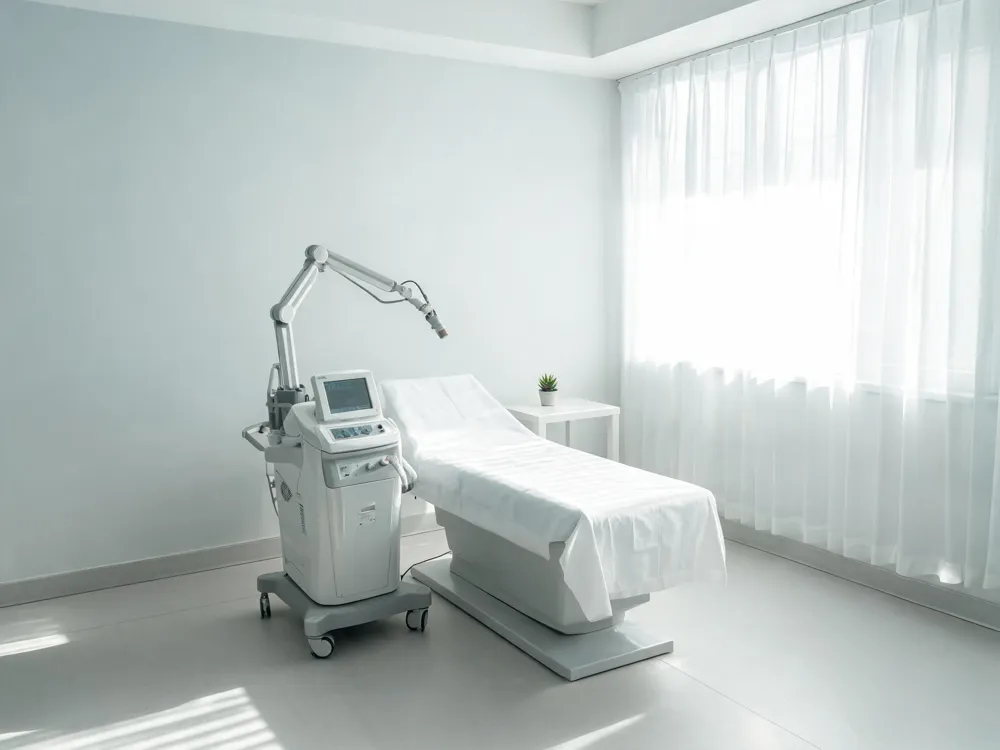
Superficial, medium, deep peel classification
Chemical peels are classified by depth—superficial, medium, or deep—a factor that directly influences safety across skin types. Lighter peels (e.g., glycolic or lactic acid) are generally safe for all skin tones. Medium-depth peels (e.g., trichloroacetic acid 15–30%) require caution in patients with Fitzpatrick skin types IV–VI due to a higher risk of post-inflammatory hyperpigmentation. Deep peels (e.g., phenol) are rarely used in darker skin, as healing time and dyspigmentation risks increase significantly.
Laser wavelength selection for Fitzpatrick IV‑VI
For darker skin (Fitzpatrick IV–VI), laser wavelength selection is critical to avoid burns or hyperpigmentation. Longer-wavelength lasers like Nd:YAG (1064 nm) are preferred, as they target deeper dermal layers while bypassing melanin in the epidermis. Fractional CO₂ lasers can be used cautiously after skin testing, but traditional ablative lasers and some IPL devices pose greater risks.
Downtime and side‑effect management
Downtime ranges from a few days for superficial peels to 1–2 weeks for deeper treatments, with temporary redness, peeling, and sensitivity expected. Immediate sun protection (SPF 50+ daily) is essential to prevent post-inflammatory hyperpigmentation. Pre-treatment preparation with retinoids or hydroquinone can reduce side-effect risk in darker skin. Proper management ensures safe healing and optimal, lasting results.
Injectables: Fillers, Neuromodulators, and the Cinderella Facelift
Botox, Dysport, Xeomin Mechanisms
Neuromodulators like Botox, Dysport, Xeomin, and Jeuveau temporarily block nerve signals to underlying facial muscles, relaxing them to soften dynamic wrinkles such as forehead lines, crow’s feet, and frown lines. Results appear in 3–7 days and typically last 3–4 months, offering a low-downtime option for maintaining a youthful expression.
Dermal Filler Selection for Volume Restoration
Dermal fillers restore lost volume by replenishing hyaluronic acid or biostimulatory compounds. For mid-facial areas, products like Radiesse provide a lifting effect for up to a year. Lips respond well to Juvederm or Restylane, while under-eye hollows are best treated with Belotero for a natural look. Fillers also correct hollow temples and soften nasolabial folds.
What is a Cinderella Facelift?
A Cinderella Facelift is a non-surgical procedure combining dissolvable threads, dermal fillers, and Botox. Soft threads are inserted and gently tugged to lift sagging skin, while fillers and Botox restore volume and smooth wrinkles. This minimally invasive treatment offers immediate, temporary results lasting several months with virtually no downtime, making it ideal for a refreshed look before special events or as an introduction to aesthetic enhancements.
Cost Overview of Non‑Surgical Facial Contouring

How much does non-surgical facial contouring cost?
Non-surgical facial contouring costs vary by modality and the areas treated. Ultrasound tightening, such as Ultherapy or Sofwave, typically ranges from $2,000 to $5,000 per session. Radiofrequency microneedling, including Morpheus8, is priced between $1,500 and $3,500 per treatment. Dermal fillers cost $600 to $1,200 per syringe, and most patients need two to four syringes for noticeable facial volume restoration. PDO thread lifts range from $1,500 to $4,500, while Thermage runs $2,000 to $4,000 per session. In total, most patients invest $2,500 to $4,000 for comprehensive facial rejuvenation targeting the face and neck.
How much does Ultherapy usually cost?
A full-face Ultherapy treatment generally costs between $2,000 and $4,000, though the price can increase or decrease based on the specific areas being treated, such as the brow, chin, or neck.
Typical number of sessions
| Treatment | Cost per Session | Typical Sessions Needed | Total Estimated Cost |
|---|---|---|---|
| Ultherapy | $2,000 – $4,000 | 1 | $2,000 – $4,000 |
| Morpheus8 | $1,500 – $3,500 | 2 – 3 | $3,000 – $10,500 |
| Dermal Fillers | $600 – $1,200 per syringe | 2 – 4 syringes | $1,200 – $4,800 |
| PDO Thread Lift | $1,500 – $4,500 | 1 | $1,500 – $4,500 |
| Thermage | $2,000 – $4,000 | 1 | $2,000 – $4,000 |
Value of combining treatments
Combining multiple non-surgical modalities can increase overall cost but often yields more dramatic and longer-lasting results. For example, pairing Ultherapy for deep skin tightening with dermal fillers for volume restoration can cost $3,500 to $8,500 but may reduce the number of maintenance sessions needed.
Home‑Based Skin Health and the Role of Hormone Optimization
Sunscreen and Moisturizers: Your Daily Defense
A consistent home-care routine is the foundation of long-term skin health. Daily application of a broad-spectrum sunscreen (SPF 30 or higher) is non-negotiable, as UV exposure can degrade collagen and elastin and is responsible for up to 90% of visible skin aging. A quality moisturizer, especially one containing ingredients like hyaluronic acid, helps maintain the skin's moisture barrier and temporarily plumps fine lines, improving overall texture and tone.
Topical Retinoids, Vitamin C, and Peptides: Active Ingredients for Results
Over-the-counter and prescription topical agents can stimulate cell turnover and collagen production from home. Retinoids (such as retinol) accelerate skin renewal and smooth fine lines. Vitamin C is a potent antioxidant that helps protect against environmental damage and brightens the complexion. Peptides act as signaling molecules that can encourage the skin to produce more collagen, supporting firmness over time.
Nutrition, Sleep, and Stress Management: The Internal Foundation
A balanced diet rich in lean protein, antioxidants (from fruits and vegetables), and healthy fats provides the building blocks for skin repair. Adequate sleep is essential for cellular regeneration, while effective stress management helps reduce cortisol levels, which can otherwise break down collagen. These lifestyle factors work together to support skin health from the inside out.
Hormone Support for Collagen Synthesis: Targeted Internal Care
Hormonal changes, especially a decline in testosterone and estrogen, significantly impact collagen production, leading to thinner, lax skin. Personalized hormone optimization, guided by a physician, can help restore collagen synthesis and improve skin quality. As part of a comprehensive plan, this approach supports firmer skin and complements the effects of topical and procedural treatments, helping to address concerns like how to tighten face skin naturally at home. While natural methods are beneficial, a truly undetectable facelift effect—focusing on restoration and volume—still relies on advanced professional care.
Your Path to a Personalized Youthful Glow
Next steps – schedule a thorough skin assessment
The journey to a personalized youthful glow begins with a thorough skin assessment at BeYounger Clinic. A detailed evaluation of your skin type, concerns, and goals informs a treatment plan that is uniquely yours. This initial consultation ensures that every subsequent procedure is safe and effective for your specific biology.
Importance of physician‑led customization
All non‑surgical therapies are designed and supervised by experienced physicians. Physician‑led customization is essential for matching treatments like microneedling, radiofrequency, or chemical peels to your Fitzpatrick skin type and medical history. This approach minimizes risks such as hyperpigmentation and maximizes natural, long‑lasting results.
Long‑term maintenance and lifestyle synergy
To preserve and extend your results, BeYounger Clinic integrates daily habits with professional care. This includes daily SPF 30+ sunscreen, a balanced diet rich in antioxidants, adequate hydration, and quality sleep. A personalized skincare regimen and periodic touch‑up sessions help sustain collagen production and skin firmness for years to come.
| Factor | Role | Action |
|---|---|---|
| Sunscreen | Prevents UV damage | Apply SPF 30+ daily |
| Nutrition | Supports collagen | Eat antioxidant-rich foods |
| Hydration | Maintains elasticity | Drink water regularly |
| Sleep | Enables repair | 7-9 hours nightly |
| Follow‑ups | Adjusts treatment | Schedule every 3-6 months |